Key Financial Decisions to Make Before You Retire
Retirement is a major life transition—and preparing for it involves more than choosing your last day of work. If retirement is a few years away, now is a good time to review your finances, health coverage and plans for generating income.
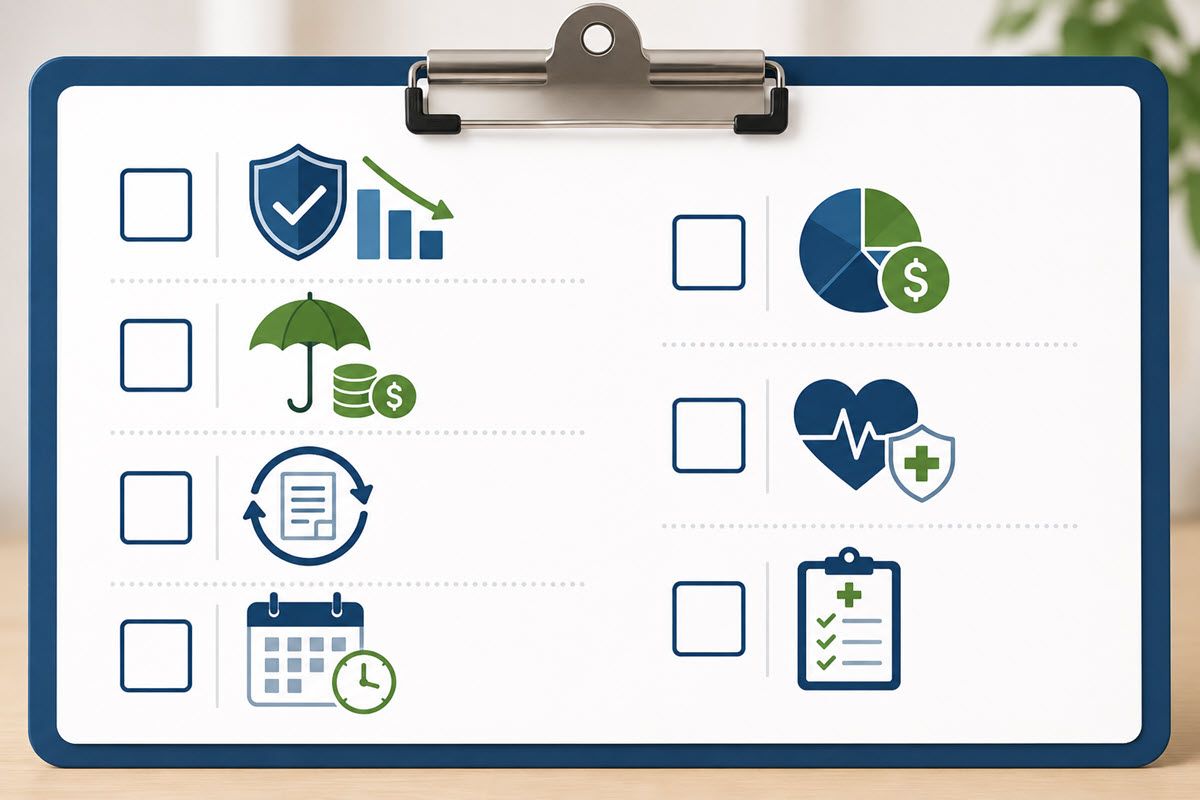
Here are several important items to put on your pre-retirement checklist.
Review Your Investment Risk
As you approach retirement, consider whether your investment mix still fits your goals, timeline and ability to handle market swings.
Retirement doesn't necessarily mean you should move your investments out of stocks. However, if you'll soon rely on your portfolio for income, a significant market downturn early in retirement could have a lasting impact. Consider reviewing your asset allocation with a financial professional and determining whether you have an appropriate balance of growth, income and lower-volatility investments.
Build a Retirement Income Strategy
Think about how you'll cover your expenses once your paycheck stops. Your income might come from several sources, including Social Security, pensions, retirement accounts, savings or annuities.
Estimate your expected expenses and compare them with your reliable sources of income. If there's a gap, consider how withdrawals from your retirement savings will fit into your overall plan.
Review Your Old 401(k) Accounts
Retirement can be a good time to review retirement accounts from current and former employers. Depending on your circumstances, you may be able to leave money in an employer plan, roll it into a new employer plan, roll it into an IRA or take a distribution.
Each choice can have different implications for fees, investment options, taxes and withdrawal rules. A Roth conversion is another possibility for some retirees, but converting pre-tax retirement funds to a Roth IRA generally creates taxable income in the year of the conversion.
Decide When to Claim Social Security
Social Security retirement benefits can generally begin as early as age 62, but claiming before your full retirement age permanently reduces your monthly benefit.
Full retirement age varies by birth year and is 67 for people born in 1960 or later. Waiting beyond full retirement age can increase your monthly retirement benefit until age 70. There is no additional increase for delaying past 70.
Your health, other income, marital situation and expected retirement expenses can all factor into the decision.
Plan for Required Minimum Distributions
If you have money in certain tax-deferred retirement accounts, required minimum distributions (RMDs) may eventually apply.
Under current law, the applicable RMD age is generally 73 for people who reach age 73 before 2033. The applicable age increases to 75 for certain younger individuals under current law. Roth IRAs don't require RMDs for the original account owner, and designated Roth accounts in employer plans are also no longer subject to lifetime RMDs for the participant.
Because RMD rules can be complex, consider incorporating future distributions into your tax and retirement-income planning before they begin.
Get Ready for Medicare
For most people, Medicare eligibility begins around age 65. Your Initial Enrollment Period generally lasts seven months: the three months before the month you turn 65, your birthday month and the three months afterward.
But don't assume everyone needs to enroll in every part of Medicare immediately at 65. If you or your spouse is still working and you have qualifying employer coverage, you may be able to delay Part B without a late-enrollment penalty. Different rules can apply to Part D prescription drug coverage, so it's important to understand whether your existing drug coverage is considered creditable.
If you contribute to a Health Savings Account (HSA), Medicare enrollment also requires additional planning because you can't contribute to an HSA once you're enrolled in Medicare.
Compare Your Medicare Coverage Options
Original Medicare doesn't cover every health care expense, so consider how you want to manage your coverage.
One option is Original Medicare, potentially paired with a separate Part D prescription drug plan and Medicare Supplement Insurance (Medigap). Another is a Medicare Advantage plan, which provides Medicare Part A and Part B benefits through a private plan and often includes prescription drug coverage and other benefits.
Costs, provider networks, coverage and plan rules vary, so compare your options based on your health needs, prescriptions, budget and preferred doctors.
Retirement brings a lot of financial decisions together at once. Reviewing these issues with a qualified financial or retirement planner before you leave the workforce can give you more time to understand your options and make informed choices. Let's build a plan and a checklist that is customized for your circumstances and future goals.